
 by
by 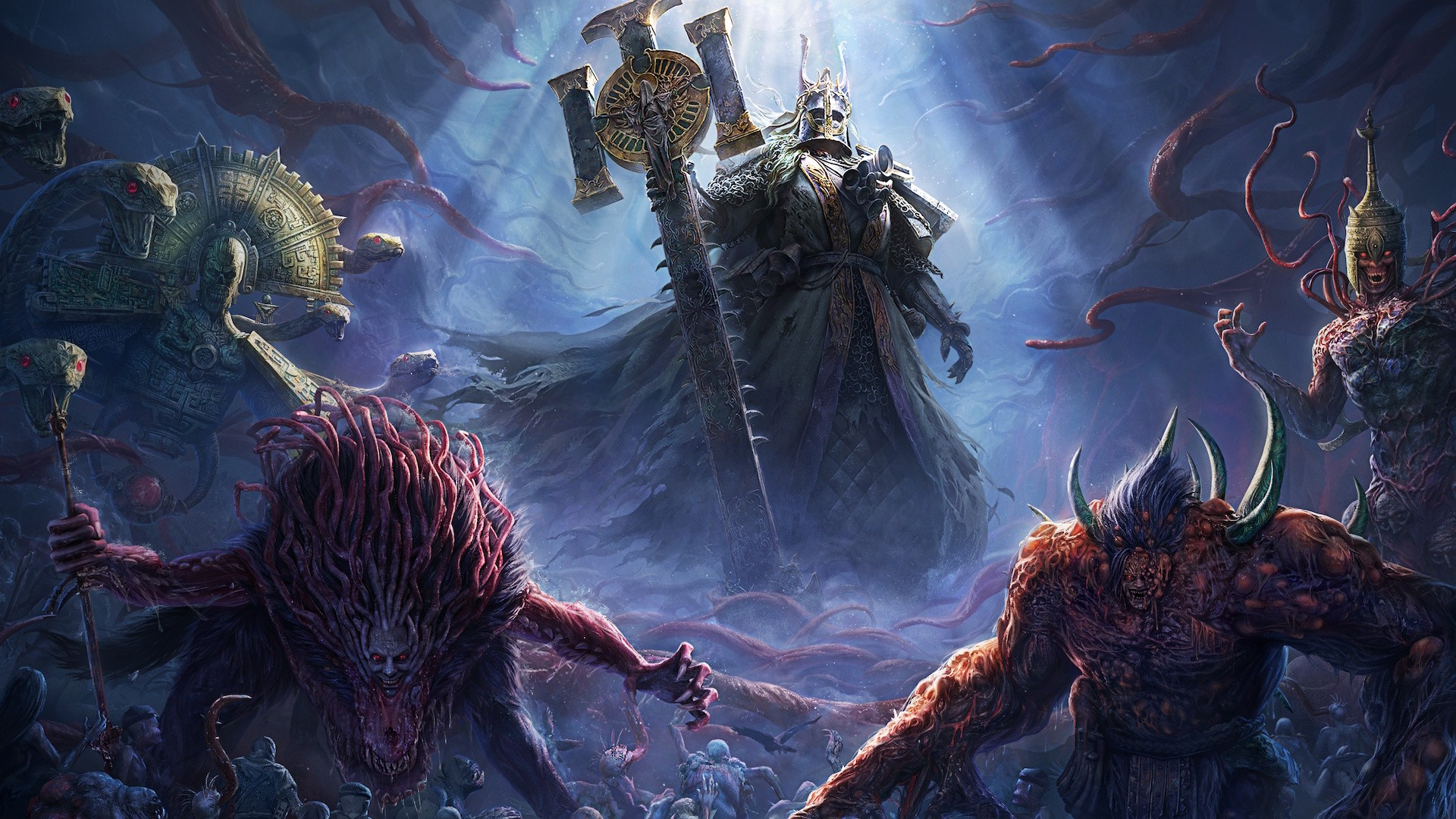
Our massive five-part dive into RPGs continues, this time shining a spotlight on twenty of the best Action RPGs you can play today - a great place to start if you've got a fresh Steam library just waiting to be stocked, or are a veteran dungeon crawler looking for a something different to play. As covered previously, RPGs are far too large a subject to tackle in just one roundup, as there's multiple sub-genres that play absolutely nothing alike. Here's how we've broken it down:
- Book 1 - Tabletop-inspired, choice-driven 'western' RPGs or 'CRPGs'
- Book 2 - Diablo-inspired fast-paced action RPGs - high loot, less narrative
- Book 3 - Theatrical and linear, systems-light eastern-styled 'JRPGs'
- Book 4 - Old-school dungeon crawlers - story-light and high on crunchy numbers
- Book 5 - Modern hybrid RPGs - At least 50% RPG and plenty of something else
Previously, we tackled traditional western-style party-driven RPGs, often heavy on the dialogue, moral choices and most of them with some kind of turn-based or pausable tactical combat. Today we're looking at the opposite - the genre that Diablo defined. A (usually) overhead camera, real-time combat, attacks that need to be evaded, a single character and minimal talking in-between hacking, slashing and looting. Procedurally generated dungeons, thousands of monsters, mountains of loot, and a character build that - if well planned - can turn you from a regular hero to an unstoppable monster-thrashing machine.
If that sounds like fun, then step right up for the Pringles of modern RPG design. We'll start with the genre mainstays, then get into a few indie picks and genre hybrids, then into a few outliers and oddballs:
Path of Exile 2 PC
While your mileage may very, this one's my personal favorite right now. Grim n' gothic sequel to the much-loved Path of Exile, this one still boasts immensely freeform character creation (aside from your sub-class, you're free to pick any skill or perk from any other character archetype), absurd potential for buildcrafting, and genuinely good combat featuring some very Souls-inspired bosses with big attacks that are best dodge-rolled away from than tanked. It also supports full online OR local co-op and has an enormous non-linear endgame that can extend the adventure a hundred hours past the end of the main game. Which, admittedly, comes earlier than it should - the final act is coming soon.
The only down-side to PoE2 right now is that it costs money. Later this year it'll be fully free-to-play like its predecessor, but if you want to play while it's in early access, you'll have to buy one of the basic supporter packs, for $30 or your regional equivalent. The good news is that this includes $30 worth of store credit (for buying stash tabs, mostly) plus some extra goodies. While I personally adore the slightly heavier, more complex combat of PoE2, if you want something a little faster and with more room to break the game wide open, you might want...
Path of Exile PC
The original Path of Exile is still one of the more popular action RPGs out there, and is completely free, supported through a couple small quality-of-life upgrades (seasonal stash tabs, mainly) and optional cosmetic stuff. Even better, those goodies carry over to PoE2, so you don't need to double-dip.
Compared to the sequel, it's faster and more projectile-heavy, closer in style to Diablo 2. It also has absolutely absurd amounts of content compared to most other ARPGs, with a ten-act main story and a sprawling endgame that features almost everything that has been added since its first beta debut, with only a few minor cuts along the way.
Diablo IV PC
No feature on action RPGs would be complete without a Diablo or two. Blizzard practically defined the genre in the first place, and have been experimenting with it ever since. Diablo 4 caught some flak during its early days, giving the sense that not even Blizzard quite knew what they wanted out of its design. Thankfully, the years have been kind and it has grown into probably the most polished and cinematic game in the genre, especially with the recent release of its second expansion, Lord Of Hatred, which includes the first expansion as a bonus.
Diablo 4 is designed to be fast, accessible and easy-to-learn - great even if you've never played an ARPG before, and requires no knowledge of prior games to enjoy. There's smart tutorials, scalable difficulty, snappy early game combat and guided character building through those early levelling hours, on top of some great character customization to really dial in what your gore-soaked hero looks and sounds like. It's a gorgeous-looking game in general that'll take everything your PC can throw at it, but scales down quite gracefully to lesser hardware - as low as the humble XBox One, even. Curiously, Diablo 4 eschews genre standards with a hand-crafted, static overworld, retaining its procedural generation for dungeons.
This would all make for an easy recommendation, but Blizzard still fall under the BDS boycott. If you've got the game already, by all means enjoy it, but consider putting your money in the pockets of less sketchy companies.
Diablo II: Resurrected - Infernal Edition PC
While the original Diablo (weirdly not available on Steam, but you can snag it on GOG) defined the ARPG in terms of broad strokes, Diablo 2 was the game that defined the genre's texture and feel for the next few decades. Diablo 2 still feels fast today, cranking up the speed, the variety in character classes, and adding so many layers to its items and crafting systems that new players often head straight to a wiki for guidance. It also recently received a remaster, updating it to modern 3D graphics without altering the game under the hood, and (more surprisingly) a whole new character class - the Warlock - in new DLC, which is included in this release.
As with Diablo 2, the fly in the ointment is Blizzard being a Microsoft subsidiary. Diablo 2 is a classic, but one I recommend you skip until Microsoft are off the BDS boycott list at the very least. Fortunately, you've got plenty of other options.
Titan Quest Anniversary Edition PC
If you're looking for a return trip through the Aegean after watching The Odyssey, this one might be the one for you. Titan Quest is an enduring favorite, twenty years old and not looking a day over fifteen, with its latest expansion less than five years old. Mechanically, it's quite close to Diablo 2 in style and structure, but taking advantage of ragdoll physics (which were the style at the time) to give its Ray Harryhausen-inspired combat a more comical edge. Expect to launch many a goat-man spiraling into the air.
There's more to the game than just Greek myth, too. As early as Act 2 of the main game, you'll be off to Egypt, fighting mummies and scarab beetles. Not too many of them though. While you'll be fighting some moderately sized swarms of enemies, Titan Quest tends to keep its monster packs on the smaller, more readable end of things, along with its spell effects.
There's also a sequel in the works (currently in early access) that's shaping up promisingly, and if all goes well, might be fully released by the end of the year.
Grim Dawn PC
While others have fallen from grace, Grim Dawn has been a quiet, steady success for its entire decade-long life. Cribbing equally from Diablo 2 and 3 and with a dark gothic setting befitting a competitor, Grim Dawn is just a whole lot of game, encouraging complex character builds with a lot of active skills. With all expansions this one is up there with the original Path of Exile in terms of scale and nearly as good in terms of character build variety.
The game recently got a fourth round in the limelight with the release of the norse-themed Fangs Of Asterkarn expansion, adding a viking-esque Berserker class, able to shapeshift into very cool wolf and raven forms. This dovetails nicely with the existing cross-class character building systems, so you can just have a wizard that turns into a big loud bird, as it should be. The expansion also adds a new ultra-endgame difficulty mode which should put even the most optimized character builds through the wringer.
Torchlight II PC
A lighter, brighter, slightly cuter take on the genre. Still fast-paced and full of monster-bashing but a bit lighter and more accessible than Diablo. Torchlight 2 is widely considered the best of its series, with the first game being a bit overly simplistic and the sequels losing the plot a bit, design-wise. Torchlight 2 hits a nice balance, with its comic-book fantasy steampunk setting and clean, readable art, and anyone that's played Diablo 2 will be quick to adapt to this one.
Mechanically, the biggest stand-out feature of Torchlight 2 is the pet system. You're accompanied from the very start by a loyal critter companion who can fight alongside you, be equipped with collars and tags as gear, and learn a few spells. They can also be sent back to town with unwanted loot to sell, and pick up some items while they're at it. Oh, and the fishing minigame dovetails elegantly into the pet system, with fish transforming your pets (temporarily) into cool monster forms for an extra edge in combat.
Last Epoch PC
A recent success, and still receiving major free updates, supported Path of Exile-style by flashy cosmetic packs. Also similar to Path of Exile, this one's a buildcrafting toybox with a ton of options for dialing in your particular brand of fantasy explosionmancy, although this comes at the cost of potentially building something that doesn't really work. Each of the five main classes branches off into three sub-classes, each with their own sub-skill-trees to navigate, so you've got plenty of opportunity to roll new characters.
Last Epoch's biggest twist is time travel, with its main story not just moving around the game's world, but different eras, expanding further once you hit the endgame and gaining the ability to explore branch timelines with their own shenanigans. It's a bit similar to Path of Exile's multiverse-hopping endgame, but a little more story-focused, with each post-main-story timeline having its own twists and narrative and leading you further into the endgame.
Warhammer 40,000: Inquisitor - Martyr PC
A little more rough-edged than some of the other picks here, but still plenty charming thanks to its fully commitment to the grimdark Warhammer 40k setting. Rather than focus on vast dungeon crawls, Inquisitor is more about fast-paced missions than other ARPGs, throwing you down onto a planetary battlefield with an objective like 'kill everything that moves' or 'rescue the VIP in time', giving its encounters a deliciously popcorny cadence. There are also Assignments - mini-campaigns strung together out of several of these shorter missions - for players wanting to really dig in for a few hours.
Curiously, Inquisitor comes in two versions - Martyr (the original, full release) and Prophecy, a standalone expansion focused on the Adeptus Mechanicus, the cult of mad cyborg techno-monks who handle all the IT work for the Imperium of Man. In any other game, they'd be the bad guys, but nope, you're playing as them here. If you own both on Steam they automatically merge into a single, larger game.
Hell Clock PC
Another recent indie pick, this one inspired equally by Path Of Exile and grim real-life Brazilian history, and recently blessed with its first expansion. Inspired by PoE's rapid-fire endgame, Hell Clock is designed for snappy single-sitting runs, with roguelite progression. While you're constantly unlocking new perks and permanent upgrades, loot, levels and perks are only held onto for your current run. With each level you're given three (or more) perks to pick from, along with a limited pool of rerolls, making this one an interesting fusion of two closely related genres.
What really sets it apart is the setting, exploring the aftermath of the War of Canudos - a euphemistic name for a one-sided massacre where the government wiped out almost every single person in an impoverished settlement. Each milestone you reach in the game reveals a little more of the story behind the real-world horrors, repainting them in lurid supernatural light, giving you plenty of literal demons to hack through with sword and pistol.
Lost Ark PC
A free-to-play Korean ARPG/MMO hybrid mega-hit brought to the west by Amazon. While not as popular as it used to be, it was a solid competitor to the likes of Path of Exile, with a bigger focus on multiplayer and account-scale progression mechanics. This does come at the cost of some of that Diablo spontaneity, and the intrusion of some classic Korean MMO design tropes, including needing to hit Item Level thresholds separate from your character's stats. Expect to grind to progress in some areas.
Still, if that's not a dealbreaker, Lost Ark is an extremely grandiose, flashy game. The main campaign takes you through some wildly varied environments (from a techno-magical battlefield full of mechs to a whimsical miniature-scale adventure through a brightly coloured pirate island), and the encounters tend to be bombastic, with huge swarms of enemies and flashy screen-filling attacks.
Minecraft Dungeons PC
A great starting point in the genre for the younger crowd. Minecraft Dungeons is a lightweight, gamepad-friendly take on the genre, with simpler combat and character-building than most. Still plenty of cute cuboid monsters to hack and slash through, but you're not going to be causing the entire screen to explode with each attack. The Minecraft aesthetic is a great fit for procedurally generated dungeons too, and it's surprising that this particular genre fusion wasn't done sooner. There's also a sequel due out in September.
Frustratingly, as ever, this one (and its sequel) falls under the Microsoft umbrella, and so the BDS boycott applies. Consider spending your money elsewhere.
Cat Quest III PC
The whole Cat Quest trilogy is an adorable alternative to Minecraft Dungeons if you're looking at introducing a younger or less experienced player or two to the genre. With gorgeous art, cute sprites and some big flashy attacks (albeit used sparingly) these hit enough of the high points of the genre to deserve inclusion here.
These are still lighter and simpler games, however, and won't keep ARPG sickos busy for very long (they're mostly linear and devoid of randomly generated dungeons), but from Cat Quest 2 onwards, the series supports full local co-op. For a little over £30 for the trilogy even without discounts (and the games frequently go on sale), it's not a bad starting point at all.
Coridden PC
One more to eschew procedural generation in favor of hand-crafted environments. This one has a sci-fi spin to it, with a focus on shapeshifting. Many of the creatures you fight can have their DNA collected, allowing you to change into them at the press of a button, each form with their own upgrade trees and quirks. The combat has a bit more weight and oomph to it than most - those creature forms tend to be bigger and heavier than a human, with big tail-swing and charge attacks that utilize that bulk.
Probably the most interesting twist of Coridden is that it's built with co-op in mind, with the option for one player to ride their shapeshifted buddy into battle, firing bows and swinging sword from their partner's back. The co-op mode works online or locally, so it shouldn't be hard to set if you've got a buddy to hand.
Children of Morta PC
A great story-heavy mixture of traditional action-RPG and roguelike, with you playing as a family of monster-hunters protecting the world, unlocking more characters, permanent upgrades and starting boosts over the course of the lengthy main story. Between runs, you'll return to your cozy, ever-improving family house, hanging out with your growing crew of characters.
The game is broadly split into two halves - the main story, offering more scripted, hand-crafted encounters, and the Family Trials, which is your classic ARPG random barrage of problems to solve by throwing fireballs at them. And of course, there's full co-op, both local and online. There's a few little bits of DLC that mostly add new characters, and they frequently go on sale, so consider grabbing that.
Metal Bringer PC
Absolute anime excess. Metal Bringer is another roguelite spin on the genre, giving you constant unlocks and new upgrades but resetting your level back to zero at the start of each run. In addition to improving your character, you'll also get to piece together customizable mechs - body, legs and arms in this sci-fi ARPG, each component having their own perks and quirks.
Metal Bringer doesn't ever let you slow down, with huge swarms of enemies constantly spawning and forcing you to move forward. But it's also a real power trip, with on-foot enemies often cleared out by the dozen with a single mech attack. Fitting for the fast-paced arcade roguelite structure, but with enough classic ARPG depth to resonate.
Kingdom of Night PC
No procedurally generated dungeons or endless endgame here, just a tightly woven '80s supernatural adventure with traditional ARPG combat, buildcrafting and loot. Stranger Things (or maybe a little bit of Buffy The Vampire Slayer) meets Diablo, then, with great sprite art and a slick synth soundtrack. I especially love that your character stat screens are their D&D character notes.
Another one with local co-op and slightly simplified character building, but enough variety across its five main classes. Going light on the random generation doesn't mean that it's a lightweight game either. Simpler stats, yes, but a chunky 25+ hour campaign to fight through, with a heavier story focus than most.
V Rising PC
A rare bit of genre hybridization here, but V Rising retains just enough of that Diablo-like hack n' slash energy that it fits in well here. Yes, in terms of broad strokes this is a survival and crafting sandbox where you'll be knocking over trees and building your vampiresona a cool gothic castle home. But almost all of V Rising's progression comes through combat, with new technology and upgrades unlocked through hunting bosses, who tend to hide behind swarms of regular enemies to hack n' slash behind.
No procedural dungeons here, but that does mean that encounters are hand-crafted and smartly placed. And the combat's no slouch either, riffing off the studio's earlier Bloodline Champions & Battlerite and requiring manually aimed attacks rather than just locking on to distant targets. Oh, and there's even a Castlevania crossover going on here, and Simon Belmont as a guest boss battle.
It Lurks Below PC
Designed by David Brevik, one of the original design leads on Diablo and Diablo 2, It Lurks Below is what happens when Diablo and Terraria have a cute pixel-art baby. This one's a full-blooded action RPG, just played from a side-scrolling platformer's perspective. The design leans a little closer towards Diablo than Terraria, however. It Lurks Below is primarily about combat, with class-based character progression, lots of loot and dungeons designed to be navigated mostly without the need for digging and destructive shenanigans.
Between delves into the dungeon, you also get to build a little town of your own on the surface, populated with NPC villagers. It's satisfying to see your own little Tristram forming, safe in the knowledge that you're there to handle the millions of demons lurking in the caves below.
Recettear: An Item Shop's Tale PC
And lastly, an oddball but deeply charming pick. Recettear: An Item Shop's Tale is part shop management sim, part action-RPG, with your dungeon delving efforts being the source of the loot that you'll be selling in the store. Neither side is particularly deep or complex, but the two aspects hum in well-tuned harmony, especially when you realize that the mercenary heroes that you hire to do the dungeon crawling for you need to be equipped by selling them gear from your store.
This one's older, from before the indie boom, so expect relatively simple graphics and a 4:3 screen ratio, but it's still a fun way to while away a few afternoons. Tragically, while there was an HD remaster of Recettear in the works, the project disbanded after the sudden passing of the project lead, previously one of a two-man team that localized the game in the first place.
And once again, we reach the end of our mighty tome of recommendations. As ever, this isn't a comprehensive list, just the least-yellowed tip of a very large iceberg. If you've got a favorite that we missed, or want to contest one of our picks, we've always got room in the comments box below. I hear there's loot goblins there, too.
Comments 0
Wow, no comments yet... why not be the first?
Leave A Comment
Hold on there, you need to login to post a comment...