
 by
by 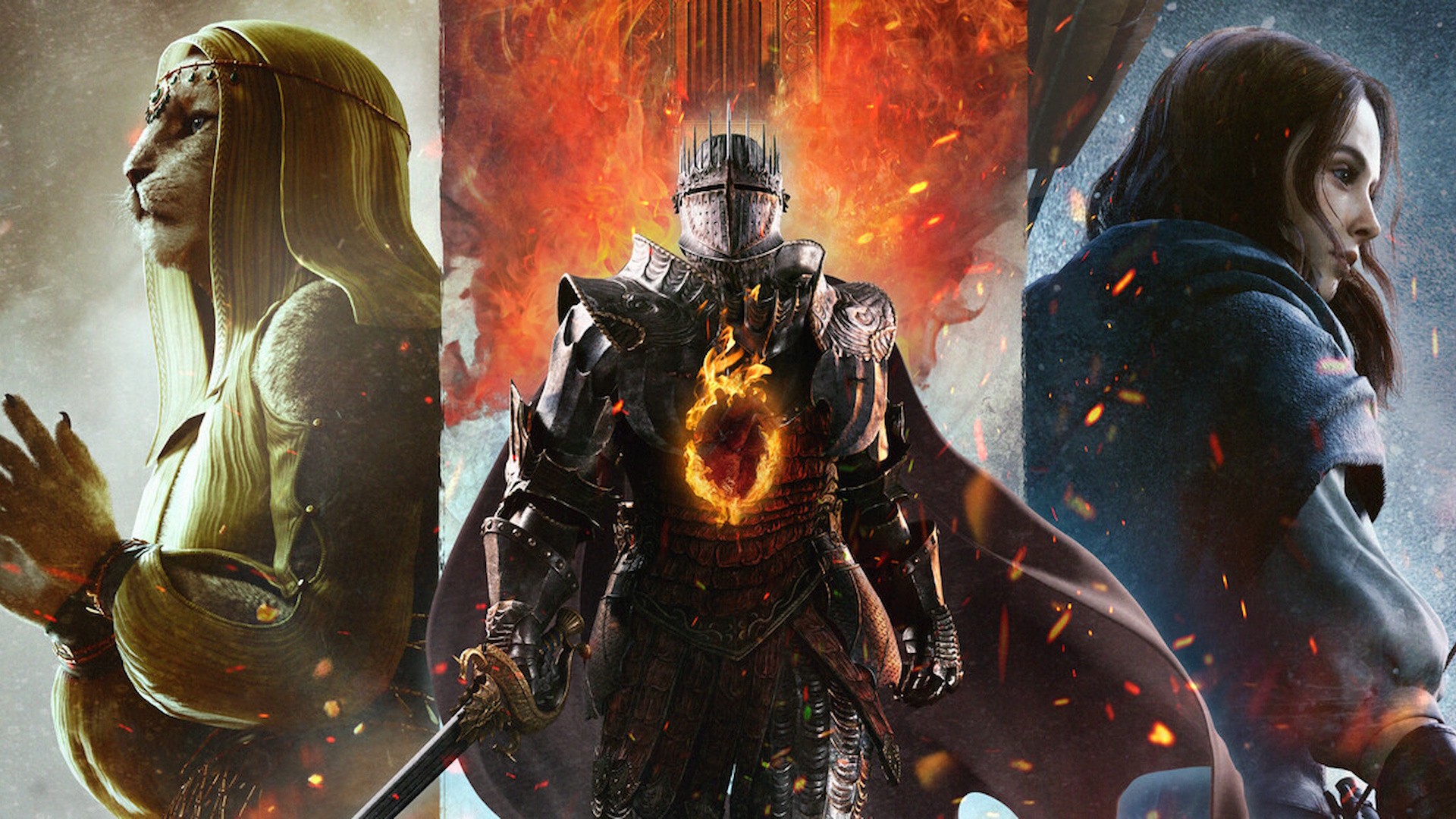
And at last we come to the last part of our RPGs 101 course. Over a hundred games across five distinct styles, and if you were to play them all, you'd probably lose a couple years of your life to them. Funny to think that this is just the tip of the iceberg, then.
And if this is your first click here, then welcome! We've got FIVE of these, split across rough genre lines. Check out the rest of them below:
- Book 1 - Tabletop-inspired, choice-driven 'western' RPGs or 'CRPGs'
- Book 2 - Diablo-inspired fast-paced action RPGs - high loot, low narrative
- Book 3 - Theatrical and linear, systems-light eastern-styled 'JRPGs'
- Book 4 - Old-school dungeon crawlers - story-light and high on crunchy numbers
- Book 5 - Modern hybrid RPGs - At least 50% RPG and plenty of something else
As for today, it's no secret that RPG elements can be absorbed through osmosis. Other genres pick up stat blocks and skill trees just by being in close proximity to a Dungeons & Dragons title. Today, we're taking a broad surface look at a (mostly action-focused) slice of hybrids. Games that (in the loosest, most vibes-driven way possible) we'd define as 'At least 50% RPG'. Look, this isn't a hard science, okay?
And so, let's begin our final (but possibly most exciting) trip through this broadest of genres, with our games largely arranged from most mainstream to least:
The Witcher 3: Wild Hunt PC
Over a decade old but scarcely aged a day, thanks to continual post-release support from developers CD Projekt Red. A massive, story-heavy RPG with action hack n' slash combat. Based on Andrzej Sapkowski's long-running series of fantasy novels following Geralt, an alchemically-enhanced monster hunter for hire. Like a surly high-fantasy Batman, he's the guy you go to when Baba Yaga is shaking down your village or a Leshen is lurking in the woods. While the first two games are significantly rougher experiences, they do let you import your save files from them, with old decisions having subtle repercussions even this far into the series.
While The Witcher 3 is set in a freely explorable open world, each side-quest is a self-contained story that feels lifted from the original short story anthologies. There's talk of a creature causing trouble, confused reports from the locals, and it's up to Geralt to figure out whether the real monster is the magical beast or the people trying to hire him. Ethical quandaries abound, and while you're free to play Geralt however you like, the game shines most when you play him how he works in the books; Understanding, empathetic and willing to throw down with the real source of the problem at any moment.
There's still plenty more Witcher to come, with a new expansion currently in the works for Witcher 3, a full remake of the original Witcher in production, plus a sequel on the way starring Geralt's adopted daughter Ciri. And don't forget the surprisingly good TV series, with four seasons down and a fifth in the works.
ELDEN RING PC
The eagle-eyed might have questioned why there's been no Souls-likes on these lists so far? Well, it's because they tend to be more akin to linear action games with light RPG elements. A fantastic genre in general, but few feel like proper RPGs, too. Elden Ring, FromSoftware's magnum opus, is different. It is as much an open-world RPG like Skyrim as it is a technical boss-bashing action game, full of quirky characters and intriguing quest-lines with multiple solutions.
While there's a recommended order to do things (and a handy light in the sky pointing you towards your next step), Elden Ring is happy to let you roam, and about 80% of the game's world is open and explorable from the moment you exit the tutorial area. You'll probably die if you travel too far, but a few choice bits of gear and mastering the game's powerful parry mechanic can take you a long way. It's one of those games where you can easily spend a hundred hours exploring its world, but even without abusing glitches, speedrunners can blaze through all the key encounters in under an hour.
Elden Ring on PC also boasts an amazing mod scene. From adding true seamless co-op letting you play the entire campaign with pals, to some enormous transformative reworks. Reforged aims to rebalance the entire game to make every spell and piece of gear viable while adding new mechanics. The Convergence reworks the game into a true non-linear sandbox with dozens of starting points. Meanwhile, gothic makeover Graceborne is transforming the game into a mega-scale Bloodborne.
Cyberpunk 2077 PC
Don't call it a comeback, but... Okay, yeah, this was a comeback. Released just too early, too rough, it took five years of major updates and an excellent expansion to get here but Cyberpunk 2077 (from the Witcher studio) really is a must-play now. A massive, highly replayable FPS/RPG hybrid based on the classic tabletop RPG, letting you play through each mission several ways, and with a city that - while not a playground like GTA - is a good backdrop for a lot of interesting side-plots.
Whether you start out as a street punk, a corporate weasel or a wastelander, the game's prologue follows you through a promising life of high-tech crime and mercenary work, culminating in a failed heist that leaves you half dead and with an AI clone of rocker-turned-terrorist Johnny Silverhand (played by Keanu Reeves) stuck in your head, slowly killing you the other half of the way. Doomed and desperate, most of the game has you following any lead that could get you out of this mess, giving its downward spiral of a story a darker, more personal edge than most. Proper neon noir stuff, at its best.
While it seems like major updates have wrapped up for Cyberpunk 2077, there's an active mod scene, a sequel in the works, and a second anime series (the first one being subtly referenced in the game) in production now.
Crimson Desert PC
A recent release, but a massive hit. Crimson Desert is maximalist design top to bottom, which makes sense, given Korean studio Pearl Abyss' experience in feature-packed MMOs. This one's a purely single-player experience, though, that feels like a fusion of Red Dead Redemption 2 and Dragon's Dogma. A scenic fantasy sandbox world full of hidden caverns full of treasure and optional boss battles, but with a lot of chunky physics-driven long-haul horse-riding, camp management and other immersive elements.
With a recent 'Enhanced Edition' re-launch addressing the game's most common complaint - an incoherent main story arc - the game is now in a significantly better state than it was at launch. Plus, there is just an absurd amount of game in this game. Yes, you could just go out exploring and questing, but you can also run your mercenary band and send your staff on jobs, invest in the fantasy stock market, trade commodities between nations, farm, or even just collect a vast number of cats to hang out with while one of them rides around on your shoulder.
Crimson Desert is still in flux, too. While patches have slowed down a little, the first few months after release saw a flood of major feature updates, addressing most of the technical and interface issues that early reviews brought up.
Mass Effect Legendary Edition PC
The sci-fi epic trilogy that launched Bioware into their most successful era, and possibly the most PS360 series ever made, featuring both Gears Of War-inspired cover-based shooter combat, RPG elements that lean heavily in moral choices (do you pet or kick the space puppy?), and no shortage of post-9/11 anxieties baked into its story of a free-wheeling super-space-cop facing down a galactic apocalypse that the bureaucrats aren't brave enough to tackle. Even if some parts haven't aged great, it's still a grand old time, assembling a crew of oddballs to do the impossible, and your character and choices carrying over between all three games.
While the Legendary Edition is the easiest way to play the original Mass Effect trilogy today, it's not quite the definitive edition. This version lacks the Pinnacle Station DLC from ME1 (thankfully restored by modders), and the excellent co-op mode from ME3, where you played a crew of commandos fighting key battles elsewhere in the galaxy. There's a few rough edges that unofficial patches for all three games hammer out, too. Lastly, this anthology lacks the (underrated, in our opinion) spinoff game Mass Effect Andromeda, which DOES still have an active ME3-style multiplayer mode. Probably best to bring your own buddies, though.
Fallout: New Vegas PC
While all of the 'modern' (everything from FO3 onwards) Fallout games have their merits, New Vegas is the one people are most nostalgic for. Despite being very janky at launch (although between patches official or otherwise, much improved now) this is probably the one first-person Fallout game to really capture the atmosphere and quest structure of the original two, with almost every quest having multiple outcomes based on your character's faction alignment, skill-set and morals.
There's a lot of room for expressive play here, carving out your own character and style as you wander the irradiated, mutant-infested post-apocalyptic Mojave desert, steering a messy three-way conflict between Vegas' independent government, the expansionist New California Republic and the Ancient-Rome-larping, village-burning, slave-trading Legion, giving this one huge replay value.
But what would a Fallout game be without mods? New Vegas has a universe of them, and while we'd be here all day if we tried to showcase even the top 1%, Fallout: New California is one of the biggest and best. A full-game-length prequel campaign that follows the Courier from their childhood in a vault, through several adventures detailing how they got their legendary reputation, and eventually leading into the fateful delivery that begins New Vegas, where you can immediately continue your adventure.
There's a remake/remaster of New Vegas in the works, too.
Gothic 1 Remake PC
An excellent remake of an old cult hit. The Gothic series defined a specific sub-genre of action RPG, where you really are Just A Guy, thrown into a hostile world full of creatures and organizations far more powerful than yourself. In this case, you're the latest inmate in a fantasy prison mining colony. There's three factions vying for power here - one carving out their own criminal paradise here, one plotting escape, and one studying magic to awaken a forgotten god - and you can only choose one to throw your lot in with.
Every monster is menacing, thanks to the intentionally stiff combat controls. Every fighter with more experience than you is also a danger if you annoy them, although they're more likely to beat the snot out of you and steal your stuff rather than kill you. You've got to listen, play smart and suck up to the right people to work your way up the pecking order. Eventually you'll become powerful enough to start pushing back, but that'll take time and effort, and that's what makes it so satisfying.
If this remake gets its hooks into you, your next step should either be Gothic 2 (which still boasts an active modding scene, including several full-game-length adventures) or the more recent, excellent Drova: Forsaken Kin, a 2D tribute to the series with faster, snappier combat but much of the same feel.
Dragon's Dogma 2 PC
Despite being an action-RPG by Capcom with Shadow Of The Colossus-esque boss-climbing mechanics, if you strip Dragon's Dogma (1 or 2) down to its bones, you end up with something very interesting: An '80s style 'Gold Box' Dungeons & Dragons game. The kind where you rolled up a completely custom party (in this case, two custom characters and two that you 'rent' from other players), were sent on a grand quest and were only given the vaguest of directions and restrictions. Go where you will, fight what you want, kill almost any NPC, if you're willing to deal with the repercussions. This is an old-school, western-style sandbox RPG with a Japanese high-spectacle action combat engine.
While Dragon's Dogma 2 caught flak for the presence of booster DLC (common across Japanese RPGs and absolutely not recommended because it breaks the game's balance) and some esoteric mechanics (like a disease that can lead your NPC party members to go berserk, murdering entire villages overnight), it still remains a cult hit, as with the original. Capcom clearly still hold a torch for it too, with an expansion and major updates still due this year, including one of the community's most-requested features: A Hard Mode.
FINAL FANTASY XV WINDOWS EDITION PC
While we had several action-heavy Final Fantasy titles to pick from here (and several of them easily argued to be better games), none are as interesting as the 15th in the series. A science-fantasy road trip adventure about a young prince and his three loyal retainers, driving cross-country to try and fix things after a coup and invasion by a foreign empire (and their legions of magic-powered robots), among other things. Everything about this from the pacing to the writing and the quirky mechanics feels unique. Even if it doesn't always stick the landing, FFXV is constantly experimenting.
One of the weirdest aspects of Final Fantasy XV is the addition of Comrades, mostly-defunct on consoles but still fully functional on PC. It's a multiplayer-centric side-game (though playable solo with bots) set during a major time-skip in the main game's adventure. Lighter on story, heavier on combat mechanics, it has you and friends fighting as a party of custom heroes, trying to restore power and light to a world trapped in seemingly-eternal night.
FFXV was also heavily defined by that weird cross-media era of early Xbox One/PS4 games, with several core chunks of the game's story being squirreled away in a movie, an anime series, a fishing minigame spinoff (admittedly less important) and even a now-delisted prologue. Just to top it off, several additional expansions were planned, featuring a possible alternative ending to the game, but were sadly cancelled after the director left Square.
Tales of ARISE PC
The long-running Tales series have been a go-to for JRPG fans wanting something a bit juicier and action-oriented in their combat. While I slightly prefer the writing in the recently-remastered Tales of Berseria, the combat in Arise is the high-point for the series, and a treat to look at besides. High-speed tag team anime action with lots of aerial mobility and juggle combos, letting you keep smaller enemies helplessly spinning in the air as you pummel them. It even holds up well on higher difficulty settings, requiring more precise evasion and defenses, but even the most brutal of optional super-bosses is still doable with practice.
Beyond that, it's a fine time. High anime melodrama abounds, following a mysterious swordsman unable to feel pain and a noble lady sniper on a quest to end an interplanetary war between their two worlds, and help the rebel forces overthrow the shackles of oppression. They also get to solve magical anime racism while they're at it - a plot-point that doesn't quite land right, but not egregiously so.
While largely optional, those hungry for more after finishing Tales of Arise can also snag the Beyond the Dawn expansion, adding another ~15 hours of high-level epilogue adventuring picking up where the main game left off. While a bit costly by itself, the complete edition of the game also frequently goes on very deep discount.
Ys VIII: Lacrimosa of DANA PC
Another long-running series, the Ys games have always been action first, RPG second, but how that action manifests is always changing. The very earliest games had you running around Zelda-style, but with sword permanently extended, bumping into enemies to deal damage. The latest few are tag-team, combo-heavy action RPGs, having you bounce between controlling multiple characters mid-fight. All while accompanied by someone of the most enthusiastic music you've ever heard in any game ever. This here's the first area theme. You also get to beat up a lot of dinosaurs in this one, and do some Dynasty Warriors-like defensive missions as swarms of monsters raid your home camp.
This might feel like underselling it, but the Ys games are pure videogame-ass videogames. What they lack in narrative staying power, they make up for in being just joyful to play, from the first to the most recent. At least, all the ones available on PC. Which is a lot. Another thing uniting all the Ys games is that they're one vast ongoing story (told non-chronologically, so feel free to jump in anywhere) following Adol Christin, a red-haired swordsman who seems to get shipwrecked a lot and dragged into grand fantasy adventures that usually culminate in killing some ancient god or mega-demon. Ys 8 is no different.
NieR Replicant ver.1.22474487139... PC
While Nier Automata is the better-known game in the series, and has snappier combat (thanks to Bayonetta devs Platinum being involved), the original Nier is still an excellent experience and probably better as a starting point on the series. A post-apocalyptic fantasy story about a young man and his sickly sister, living out their days through the twilight of mankind, as magical shadow-creatures slowly become the dominant species. After discovering a sassy talking spellbook, things escalate in every sense of the word, including some spectacular bullet hell-inspired boss fights where you can hack through the oncoming projectiles.
The story is a huge draw here. These are weird characters in a weird world, reacting with all-too-human flaws to an increasingly impossible situation. As with the Drakengard series before it (also set in the same convoluted universe/timeline), Nier isn't nearly done with you when the credits first roll. There are multiple stories here, told from multiple angles, with some massive twists that'll recontextualize everything that came before. It's well worth sticking through until you get to the true finale, which has been extended somewhat in this remade version.
The only downside to the remake is that it features the younger, previously Japanese-exclusive version of the protagonist. Those preferring the older, dadlier version of the character previously in the original US 360/PS3 version aren't without hope. A recent community mod project has finally made him playable too, dialogue and all.
Eternal Strands PC
A recent, undersold gem from a team of ex-Bioware & Ubisoft talent. A high fantasy fusion of Monster Hunter's boss-hunting, Shadow of The Colossus' monster-climbing and Breath of The Wild's complex elemental, reactive magic systems (including heat and cold radically affecting the environemnts), all spiced up with a little bit of extraction shooter inspiration. While never too tough or punishing, pushing your luck and getting wiped out on an expedition will cost you all the treasure you were carrying and hadn't banked, so you're encouraged to tap out if you find yourself out of your depth.
It's also gorgeous to look at, with a bright cartoony fantasy art style, and some beautiful vistas to look out over after climbing to the top of the game's many looming towers, statues and mountain peaks. While not truly open-world, it's broken up into nine decently large, explorable environments, each one built for replayability, as variant bosses will spawn once you beat the original version in any given zone. All the more room to explore the game's complex magic system, customizing spells with new components between expeditions. The Bioware inspiration is clear once you're back at camp, too, with plenty of chatty characters to hang out with that have their own personal arcs, even if they're not joining you out in the field.
Pyre PC
Not every fantasy RPG has to involve stabbing monsters with swords. Pyre is a sports story about a 3v3 wizard basketball league in hell, and also one of the most reactive narratives in all of videogames. Easily the most underrated game from SuperGiant (Hades, Bastion, etc), it's easy to miss Pyre's appeal if you're just casually cruising through on Normal mode, winning every match. It's an okay little arcade sports game with some interesting RPG mechanics and a fantastic aesthetic, but it can feel a bit insubstantial, with your ascent from basketball hell all but assured.
And this is why I implore you to push Pyre's highly-customizable difficulty up as far as you can stand. You should be sweating every match, and defeat should feel very possible. You'll even want to lose now and then, because the story keeps on trucking - sometimes down very different roads - whether you're winning or not. Every decision, every choice and every mistake is remembered and WILL have repercussions, right down to the game's ending vocal theme having hundreds of different verses possible, based on your choices. Pyre is one of those rare games that gets better the more you replay it, revealing more of its secrets and alternate plot-threads.
Also there is a wizard dog. He plays wizard basketball. He has a fabulous moustache.
CrossCode PC
Part Zelda, part Diablo, part Terranigma, all with the tone and style of Phantasy Star Online. CrossCode has clearly drawn inspirations from a broad spread of games, but it combines all those elements into a fantastic whole. This is a massive, story-driven adventure set inside a far-future telepresence MMO, where people puppeteer around remote android bodies in a simulated science-fantasy universe. Your character, Lea, is only partly connected, and unable to speak, just able to use a handful of pre-programmed phrases, making for some fun, if awkward dialogues as she tries to piece together her fragmented memories while making friends within the game.
Crosscode's combat is fast and aggressive, juggling between projectile and melee attacks, with the overworld encouraging you to push your luck and push through multiple fights without healing in order to gain bonus XP and loot. The dungeons are also very puzzle-heavy (moreso than your average Zelda), demanding some smart thinking. There's plenty of crunchy RPG systems, including complex gear and respeccable character builds, and your choice of NPC party members will help define your play-style too.
While Crosscode is a self-contained story (epilogue DLC aside), its spiritual successor, Alabaster Dawn, recently launched into Early Access and is shaping up great. Familiar combat, a whole new setting and some of the more gorgeous, smoothly-animated sprites in any game, indie or otherwise.
Arco PC
There's no RPG quite like Arco. Portrayed in only the tiniest, chunkiest of pixels, it's a fiercely angry, anti-colonialist revenge story set in a fantasy world that echoes the history of the American continent (north and south) and the abuse of all the native cultures there. It's also really dang fun to play, with great gunslinging combat that plays out a bit like Enter The Gungeon, but turn-based. That is, you plot out your party's next dash, dodge, shot or clever bit of item usage, and then watch the turn play out in real-time, a brief second or so of action, then back to planning your next step.
The smartest twist here is the game's guilt system. Chances are, you'll make some decisions you don't like the results of. That guilt haunts your character in the form of literal ghosts that slowly move towards you while you're planning your turn, forcing you to either act quicker (potentially in more panicky, unpredictable ways) or suffer damage. Sell your soul for power and yeah, you might gain some powerful advantages, but at the cost of becoming more and more real-time.
Weird West: Definitive Edition PC
Two fantasy western games back-to-back? Likelier than you'd think. Developed by a crew of ex-Dishonored devs, and it shows. Weird West is a fusion of isometric third-person shooter, stealthy immersive sim (sneak, pick locks, avoid sight cones and abuse a physically-driven world to solve problems creatively) and highly reactive RPG set in an extremely haunted old west setting.
The story of Weird West follows multiple protagonists through their own adventures, each around five hours long. It starts with a retired lady gunslinger on a quest to avenge her family, but then getting into weirder territory, letting you play as a werewolf, a frankensteined-together pig-man and a native spirit-mage. Each one with their own relationship with the world (obviously the werewolf and pig-man aren't too welcome in human settlements), but also decisions you make with one character might have significant repercussions for another later down the line.
Despite the dark and violent setting, it is possible to play Weird West pacifist-style, too. Extremely difficult, though, so save that for a future challenge run.
Noctuary PC
And hitting you with some whiplash, we're going from grim and gritty western adventures to a Chinese-developed magical girl adventure. Noctuary is part action RPG, part visual novel. And the visual novel is probably the bigger part. Set in a soft-edged fantasy world, Fancia Dream and Alina Nightsong are aspiring Arborangers - magical heroes who handle odd jobs, deal with roaming shadow-monsters, and help rescue those lost in the gloomy lands beyond.
Despite there being a lot of talking going on, the action here is no slouch. A mixture of setpiece boss arena battles, dungeon crawls and mission-based encounters (like protecting farmland from monster pests) that'll keep mixing stuff up to the end. You get to control both characters at once, tag-teaming between them, and each of them has three different weapons/attack-stances, making for extremely technical action. There's also some sequences where you play as other members of the cast. There's some crunchy RPG mechanics here, with each friendship built giving you another perk to equip to your characters, up to a certain power limit.
Verho - Curse of Faces PC
Before Dark Souls and Demon's Souls there was King's Field, FromSoftware's original dark, first-person, real-time action dungeon-crawler series. Experiencing a resurgence of interest, the King's Field style has seen a revival in recent years (check out the excellent, grimy Labyrinth of the Demon King), but the best so far is almost certainly Verho. A well-paced dark fantasy adventure with a highly explorable world, interesting loot tucked away in tons of secret spaces, and demanding action combat where stats and character build are as important as precision and timing.
Don't let the low-fi aesthetics (halfway between the PS1 and PS2) put you off. This is a vivid and creative trip through a twisted, weird fantasy world plagued by a surreal, nightmarish curse; When seeing each other's faces, both people involved die on the spot. And so, everyone now wears thick, custom masks, obscuring their identity but preserving human life just a little longer.
Okay, there may be some covid allegory going on here.
On top of being a respectably chunky action RPG (15+ hours for most) on a first playthrough, there's a whole second loop here with new encounters, bosses and loot, and a randomizer mode throwing everything into a chaotic blender. If this one got its hooks into you first time round, it'll do it again.
Erenshor PC
And lastly, a true oddball game that doesn't quite fit in anywhere else. Erenshor is a simulated MMO. That is, a single-player game set in a vast open world shared by swarms of NPC adventurers, each out doing their own thing and able to be recruited into your party or guild. This isn't like .Hack or even Crosscode above, being an action RPG that just happens to be set in an MMO. This is the full classic MMORPG experience, loot, raids, respawning NPCs, faction allegiances and all, set in a huge multi-zone open world.
While the combat here is halfway between the early days of World of Warcraft and Everquest, the meat of the game is in the simulated social aspects. As you build up your guild and fill out your virtual friends list, there's a bit of a management aspect to the game, recruiting the right talent, keeping them happy (each one has their own personality and quirks) and bringing them along on those high-risk, high-reward dungeon runs. And unlike a real MMO, as party leader, your strategies and orders are going to be followed. Probably.
Erenshor is still in early access, but is already a very beefy game, spanning everything from your early days of rat-bothering to some large-scale 'raid' encounters that throw swarms of simulated players into the grinder.
And there we have it. If you can't find something you like (or something new, for that matter - we did include some deep indie cuts), then we'll just have to defer to your wisdom. Got a favorite to share, or just want to compliment us on our incredible taste and swag? Share your thoughts in the comments below.
Comments 2
@DominicTarason good list! Will always be happy to see CrossCode on this type of article.
While reading it a thought struck me that you have covered most types of RPGs but not use MMORPGs is a list on these on the horizon? Might be worth doing an online games thing similar to this RPG service and then have a sub list for them.
@Glassneedles MMOs in general might be something we tackle in time, but that's a very tall order to cover. I only play three on-and-off and I'm one full expansion behind on Final Fantasy XIV, almost three on Guild Wars 2 and who KNOWS how much more of Elder Scrolls Online I've got to dig into.
For the next roundup, I'm thinking something smaller. Literally. Like shmups.
Show Comments
Leave A Comment
Hold on there, you need to login to post a comment...