
 by
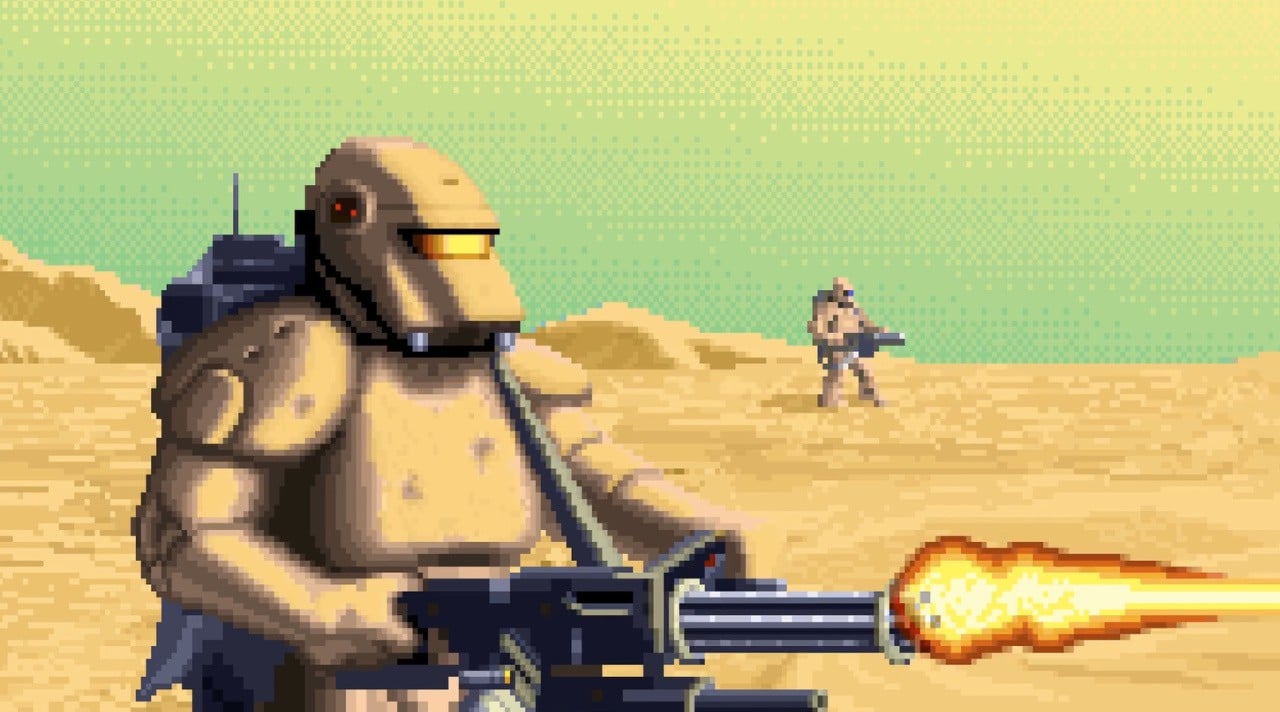
Dune 2: Battle of Arrakis / The Building of a Dynasty is widely regarded as the first 'true' RTS title and inspired a host of clones that continue to this day (I personally consider Herzog Zwei to be the first RTS I played, but let's not get into that right now).
Westwood Studios' title also had a massive impact on me as a gamer. When my dad purchased the first family PC in the early '90s (a Mitsubishi Apricot XEN 486DX, in case you're interested), Dune 2 was one of the first games we booted up – and hearing that crystal-clear speech during the cinematic introduction sequence was a transformative experience.
While it was billed as a sequel to Cryo's point-and-click adaptation of David Lynch's 1984 movie of the same name (based, of course, on Frank Herbert's seminal sci-fi novel series), Dune 2 was in a different genre and created by a totally different developer – but it was still based on Lynch's movie, and that's one of the many reasons we've never seen a re-release in all this time.
Marcin Paczynski, senior business development and partnerships manager at GOG, has been speaking to GamesRadar+ about bringing classic games to modern audiences, and Dune 2 cropped up in conversation.
"This is one of the holy grails," Paczynski says. "It's on the top of my list, my personal one, because this is a game that I have a lot of nostalgia for. The situation is a good example of how bad it can get with the licensing situation of a game."
What Paczynski is referring to is the fact that Dune 2 was published by Virgin Interactive and created by Westwood, both of which were purchased by EA in 1998. "So currently, Electronic Arts has the game code, the assets, all of the rights to those things, and all the materials around the game," Paczynski says. However, EA doesn't own the IP. So who does?
Well, it's not the Herbert Foundation, as you might assume, "because the games were not based on the books; they were actually based on the movie from 1984," adds Paczynski. "That movie was created by Universal Pictures, and the main producer for that movie was [Dino De Laurentiis]. The problem is that he also [had] part of that movie license with him. But he died 15 years ago."
It's not currently known who inherited the rights when De Laurentiis passed away, but you can surely get an idea of the legal nightmare companies like GOG have to unpick with these classic titles. "You have Universal Pictures, Electronic Arts, and the successor for the original rights holder of the movie IP," says Paczynski. "On top of that, you have the Herbert Foundation that holds the rights to the IP as a whole, and on top of that, you have Legendary Pictures that owns the IP to the new movies."
Ah, yes. Legendary is involved too, as it awarded Funcom the rights to create video games based on the new Dune movies – which resulted in Dune: Awakening. "There is an exclusivity there," Paczynski tells GamesRadar+, although he admits he's not sure whether this would prevent the re-release of older Dune titles, including not only Dune 2 but also the Westwood-developed sequels Dune 2000 and Emperor: Battle for Dune.
Even if this could all be sorted out with the minimum of fuss, the economics often make such ventures impossible. Paczynski says a title like this might sell "50,000 units – maybe 100,000 – for $5.99 or $9.99," which means the reward sometimes doesn't match the effort involved.
As the great man himself once wrote, "the mystery of life isn't a problem to solve, but a reality to experience." The reality here is that we may never see a legal re-release of Dune 2, sadly.