
 by
by 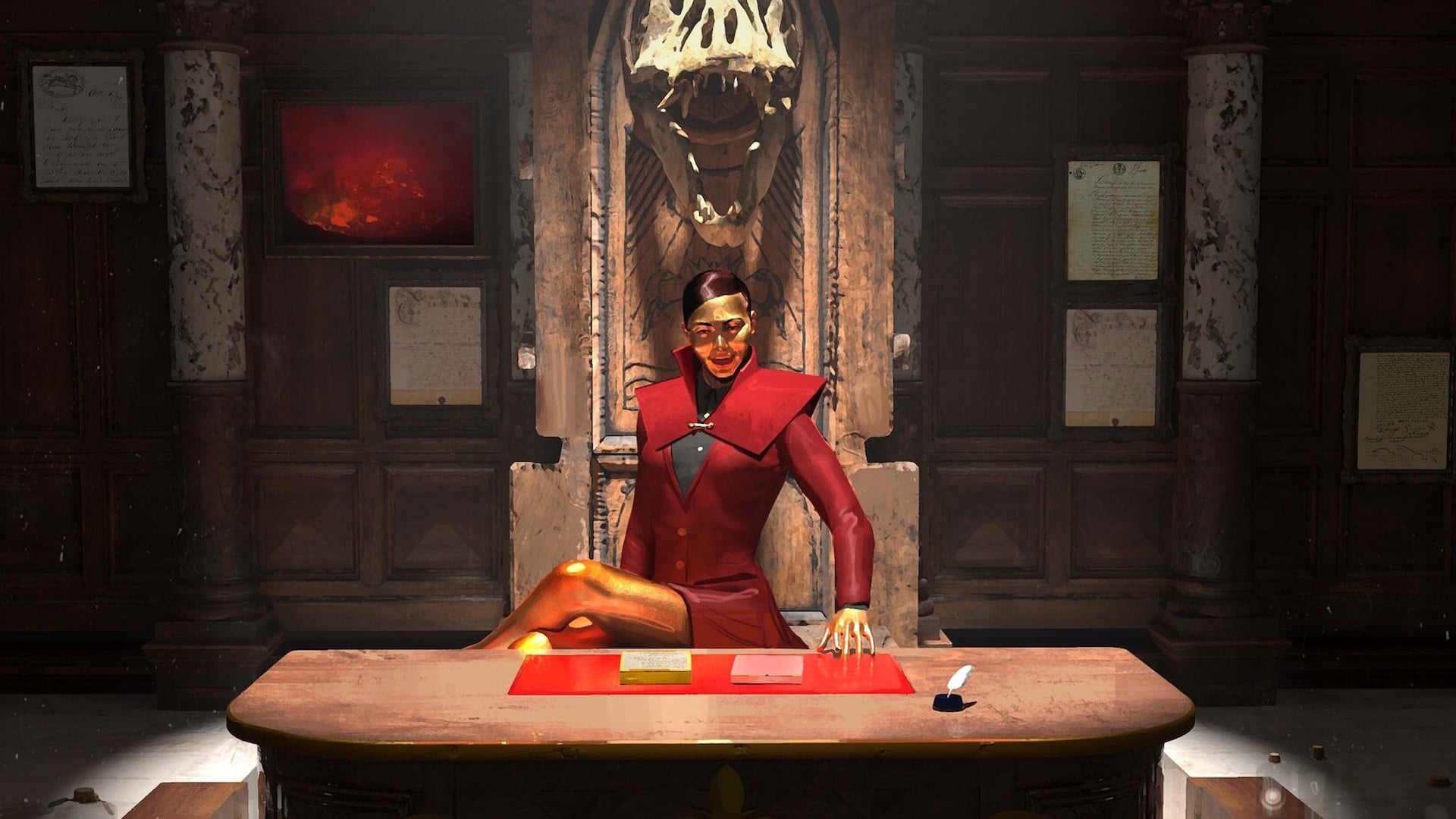
RPGs tend to be very long-form games. Even when they're roguelites, there are often many hours of plot threading together individual runs into a larger whole. Thousand Hells: The Underworld Heists - out today - surprised me by feeling like a tabletop one-shot introductory session. And then another. And then another, all built for replay and exploration and set in an excitingly fresh, vaguely Arabesque setting, where thieves, treasure-hunters and schemers descend into a fragmented underworld for that one big score.
It's a pretty major departure from form for developer A Sharp, creator of the classic fantasy town-management RPGs King of Dragon Pass and Six Ages. While some of those games' DNA is here (especially in presenting everything as multi-choice dialogues without ever clearly telling you the odds), this feels like a wild swing, and from the couple of sessions (around three hours total) I've played so far, I'm absolutely playing more over the coming weeks.
Thousand Hells feels like a lightweight, solo simulation of a tabletop roleplaying game, launching with ten scenarios, each one a self-contained story. One might have you on the trail of a demonic playwright, his talking first draft providing advice as you go. Another has you tasked with unknowingly smuggling a still-living man into a notoriously brutal prison in hell. At the end of each heist (around 1-2 hours on a successful run), the story is over, and any surviving characters go their separate ways.
There's no progression here, nothing to unlock beyond letting you pick already-played adventures again, and from what I've played, that works in Thousand Hell's favor. It lets each adventure be its own thing. You create a new character, deciding your strengths and weaknesses during your intro. You assemble a fresh team of characters at the tavern the night before your big job, and you either randomly or manually pick which of four specific underworlds your quarry is located in, throwing unpredictable extra events into each job.
Plus, like many good tabletop games, you also get a pool of vague resources that you can use to retcon stuff into the story. Reach the shore of a magical ocean? No way to get across? Well, you just happened to pick up a portable magic raft in that town you passed through earlier, which feels cheeky, but satisfying, even when it's a scripted option picked from a menu.
Thousand Hells even goes light on dice. Whenever a challenge presents itself, you're asked to pick one of your characters to step up to lead. You can then draw random tiles from their personal 'bag' (or randomly from a pool representing the rest of the party), representing their strengths and weaknesses - things like "This character is a confident leader" or "This character is highly agile". Pick one of three possible approaches (unless it's a crisis and forcing you to tackle just one), pick which tile best fits it, and you'll get positive or negative modifiers to the dice rolled to decide whether you pulled it off. Simple. And unless you spend Insight (a recharging but limited resource), it never tells you the odds.
It creates a sense of you throwing stuff at the wall with a slightly capricious DM at the table. Sure, there's someone about to fall off a ship's deck - is it better to make a "I think I saw something" check or something more physical? And there's every chance that you'll fail and be forced to restart a quest. Which just gives you an excuse to explore more of the possible story branches, party compositions, and approaches. Mistakes can compound - an injury might mean that character might draw a tile representing their pain, instead of a strength, but even failure can result in interesting scenarios. When trying to convince a hellish judge that I was close enough to dead to be let into hell already, a major wound provided a compelling argument.
It's that kind of stuff that has me curious to see what other adventures await, and just how much stuff changes on return trips through each story. While the game doesn't have much in the way of graphics to speak of, each scene is accompanied by some gorgeous watercolor art, painting its Arabic-inspired worlds of the living and dead as vivid storybook scenes, inspired by multiple cultures, with music to match. It feels mythic, like playing through the folklore of a culture that doesn't quite exist, and even if the writing wasn't compelling and the heists themselves thrilling, that would be enough to bring me back for One Last Job.
Thousand Hells: The Underworld Heists is out now for £22.49/$25 with a 10% launch discount running until September 15th, and further savings if you own I Was A Teenage Exocolonist, Sunless Skies or Heaven's Vault - three great games which also take big creative narrative swings. As an aside, Thousand Hells is published by Kitfox, the folks who backed the likes of Dwarf Fortress, Caves of Qud and Ostranauts.


Comments 0
Wow, no comments yet... why not be the first?
Leave A Comment
Hold on there, you need to login to post a comment...