
 review by
 The kids are alright, and Endacopia is proof. A truly old-school point-and-click adventure made with the ancient (1997) Adventure Game Studio toolkit, funded on Kickstarter by a fresh-faced and excited audience and developed mostly solo by Andyland, an independent artist and developer too young to have grown up with the likes of King's Quest or Sam & Max, at least in their original forms.
It is also a fine example of present-day humor and modern tonality in game writing, with appeal that spans from young kids to greying oldheads. It's also very funny, cute, and occasionally a bit scary.
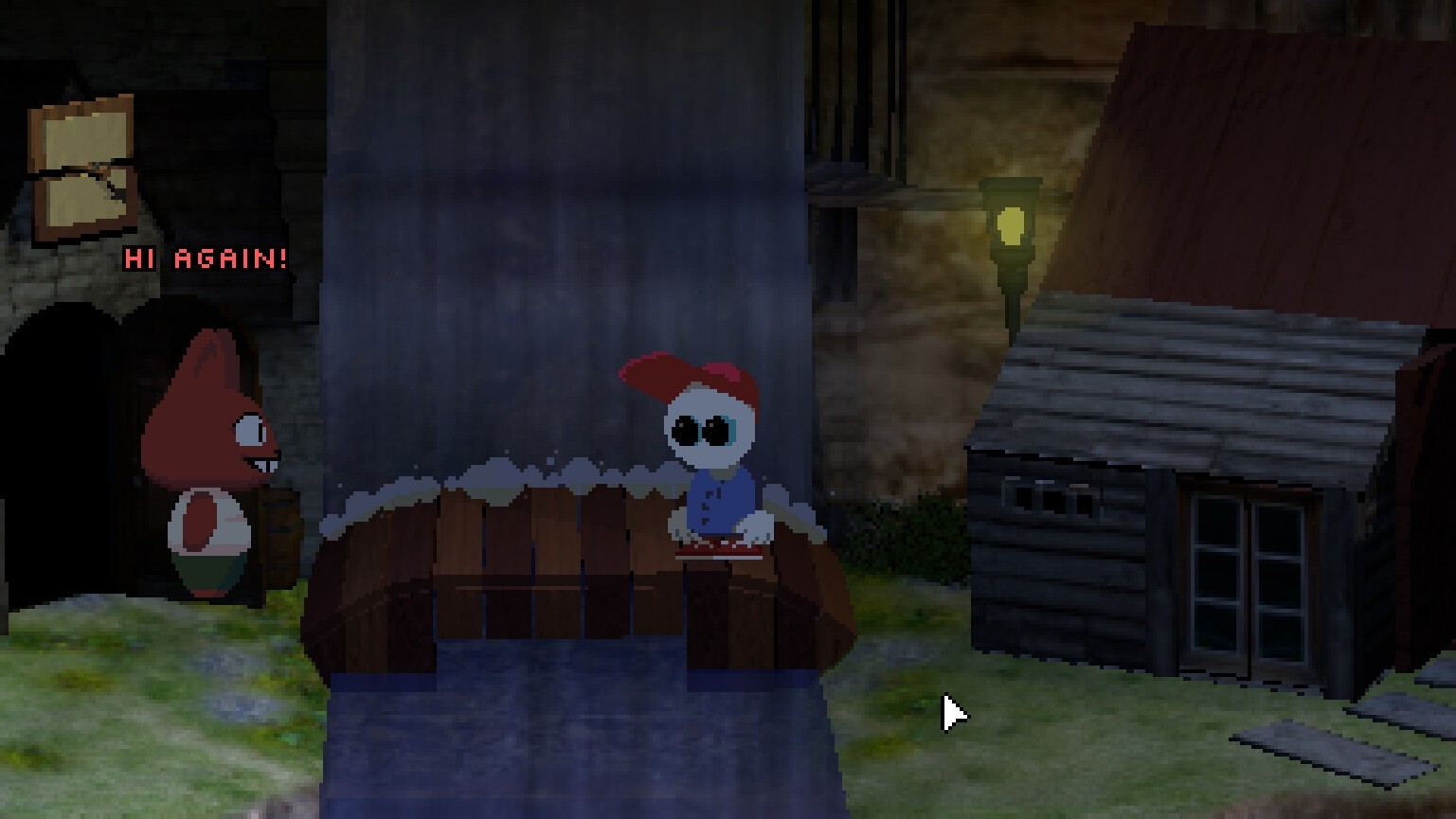
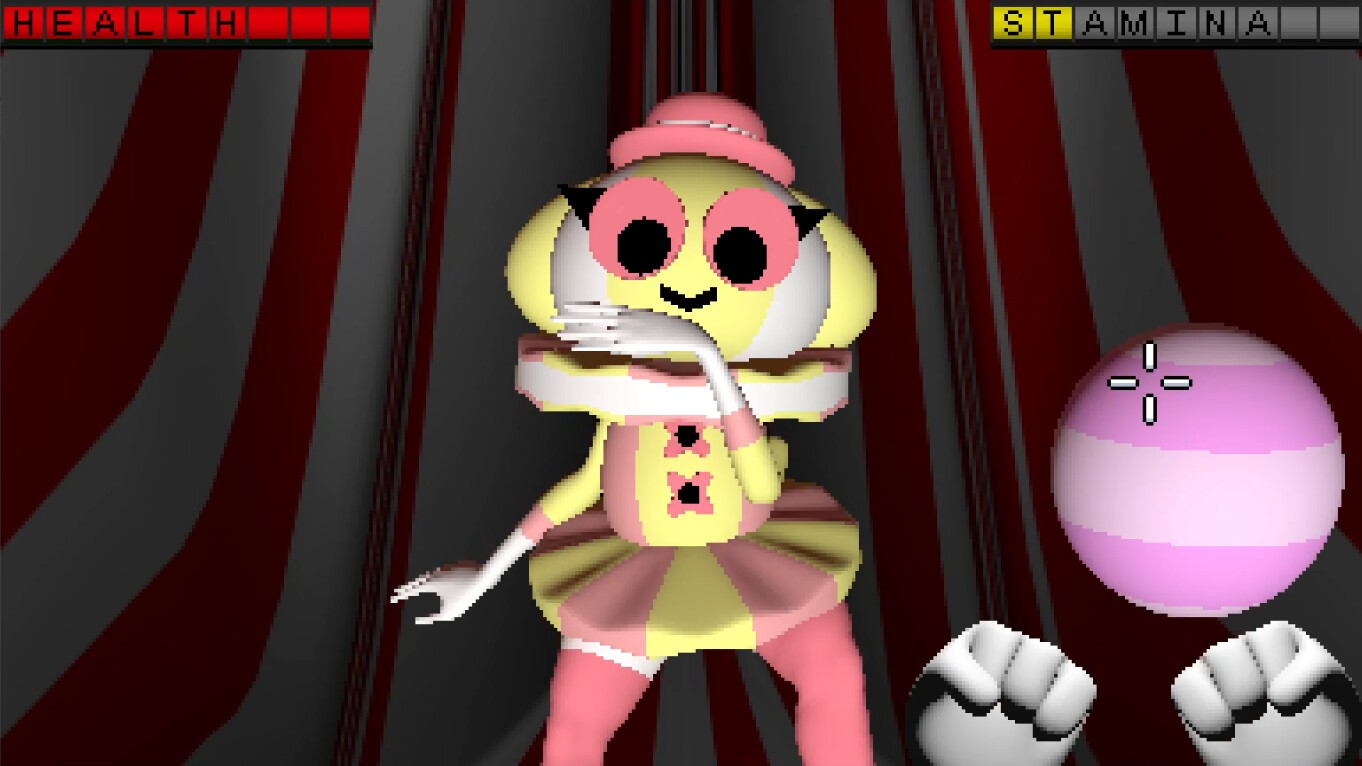
Endacopia is the story of Mellow, a simple boy made out of simple pre-rendered shapes. He can't read. His memory isn't that great. He loves Computer and Soccer Ball. He walks around with the WASD keys (or controller - the game plays nicely on Steam Deck) and interacts with the world by Looking, Touching and Talking, most of which he does with a short-tempered but helpful talking signpost named Tip. So far, so My First point-and-click adventure. Up until you stumble into the game's first boss fight, where it segues into a Punch Out-inspired arcade fight to the death. This game likes to throw some curveballs.
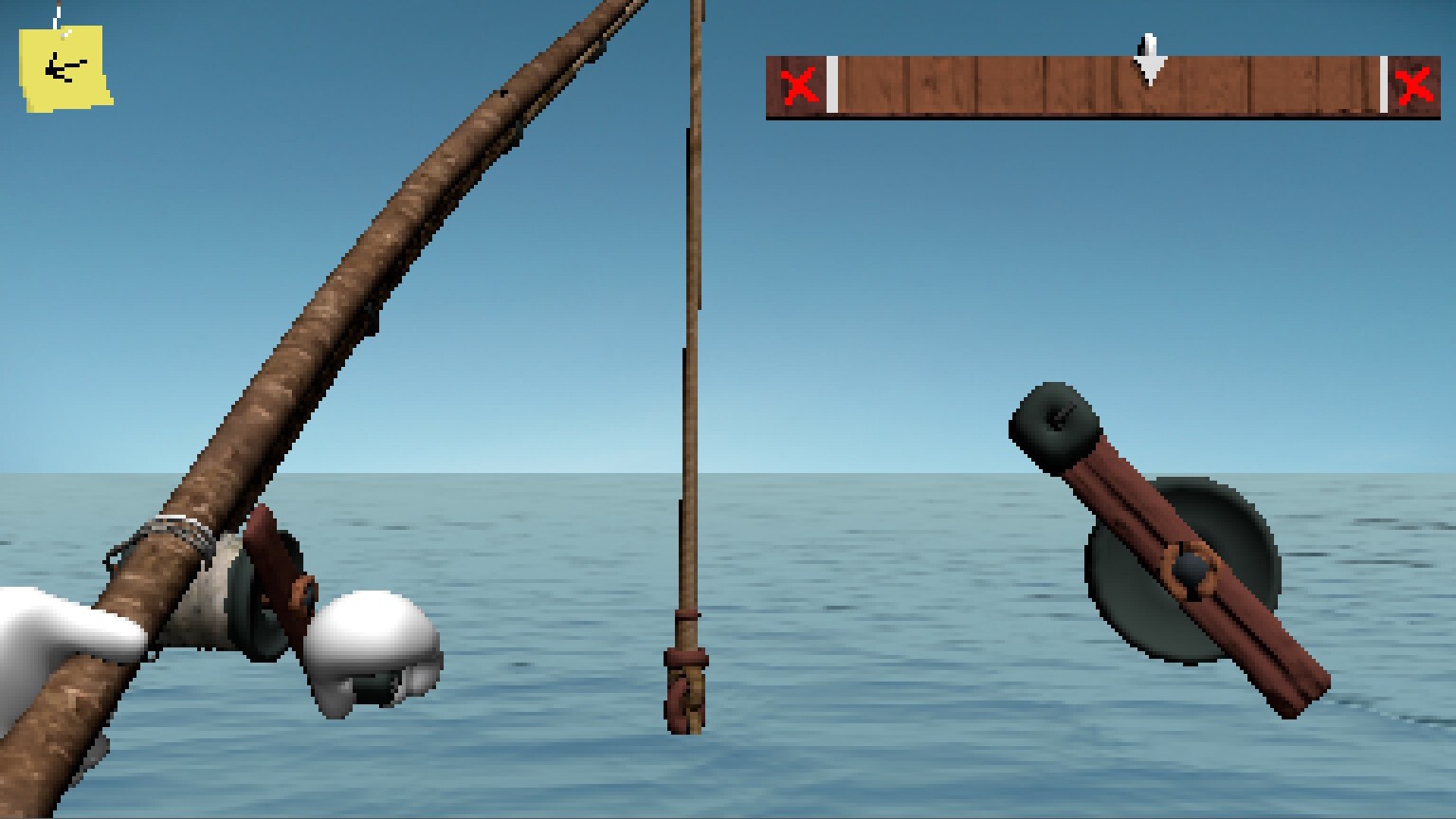
Those curveballs almost all land, too. While not especially difficult, each fight has its own memorable twist and a unique composition accompanying it, adding some exciting punctuation between the puzzling and exploration. For most of the game, Mellow isn't so much on a quest of any sort as just kinda stumbling through a surreal existence full of weird new friends and some downright creepy foes, wandering through a world that has more in common with '90s kids' adventures like Putt-Putt or Freddi Fish.
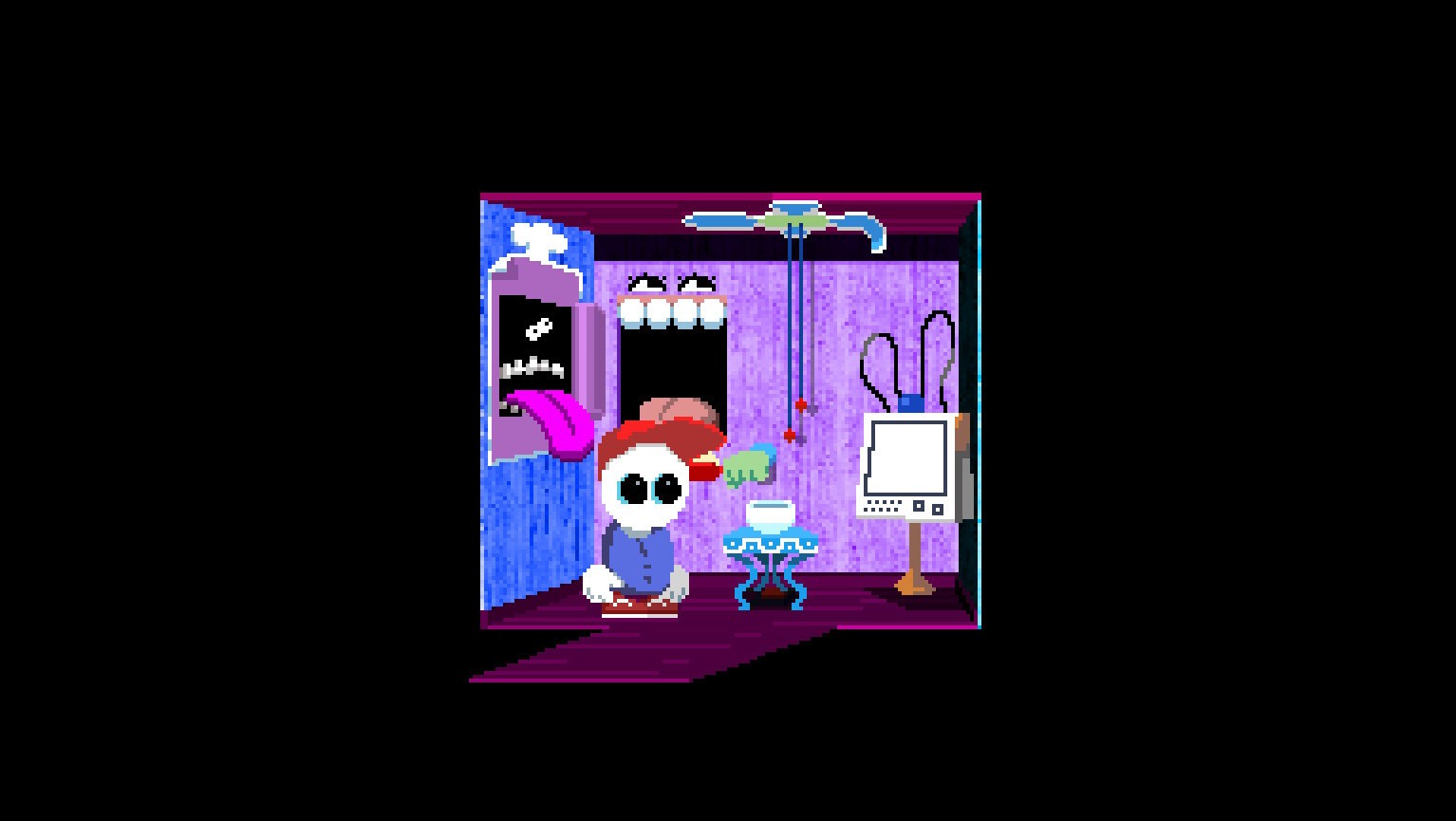
This is a bright and whimsical universe that doesn't want to be limited by a single art style. Some areas are pixel-art, some areas are pre-rendered 3D, others bring in photo-collage and image manipulation stuff. This is the work of an artist who wants to do a little bit of everything, and where if a background item doesn't have a purpose, then it'll do something funny and cute if clicked. Very whimsical, very safe. Up until Mellow sinks through the floor into a room full of screaming faces and pulsating organs. This game really likes to throw some curveballs.
See, this is a horror-comedy game that understands that both start at the same point. Both genres build tension, and then release it. It's just that here you never know whether it's going to be with a joke, a jump scare, an unsettling revelation, or (in multiple cases) a toe-tapping earworm of a musical number. Death is also little obstacle, with lethal errors giving you a short, unique, bloodless (and frequently very funny) death animation and then rewinding time to just before you goofed.
Solving Endacopia's puzzles (a broad mix of inventory shenanigans, dialogue navigation and single-screen logic challenges) is satisfying enough, but this is a game that rewards each little bit of progression with a constant drip-feed of brain-candy and surprises that kept me grinning all the way through my first playthrough, clocking in at a little over six hours. And then I jumped straight back in again to see more.
One of Endacopia's smartest design decisions is its structure. Point-and-click adventures tend to be naturally linear, which means that if you hit a puzzle that you can't solve in a timely fashion, you just get stuck and grind to a halt, or look up a walkthrough. The majority of Endacopia is spent bouncing between three locations: a brutalist concrete workspace, a carnival for depressed clowns, and an Animal Crossing-like town stalked by a serial killer.
Each location has a radically distinct feel to its puzzles, with the Animal Crossing town leaning most towards horror and traditional point-and-click puzzle solving, elevated by a time-of-day cycle mechanic that changes which characters and routes are available at any given time. The office space leans heavier on one-shot logic puzzles and single-screen mysteries, often solved with a smart bit of item usage. The Sad Clown Zone has a mixture of dialogue puzzles and minigames, and several optional puzzles (a requirement for a deeply hidden secret ending that will likely take at least a second playthrough) require you to really think outside of the box, hopping between the three core areas.
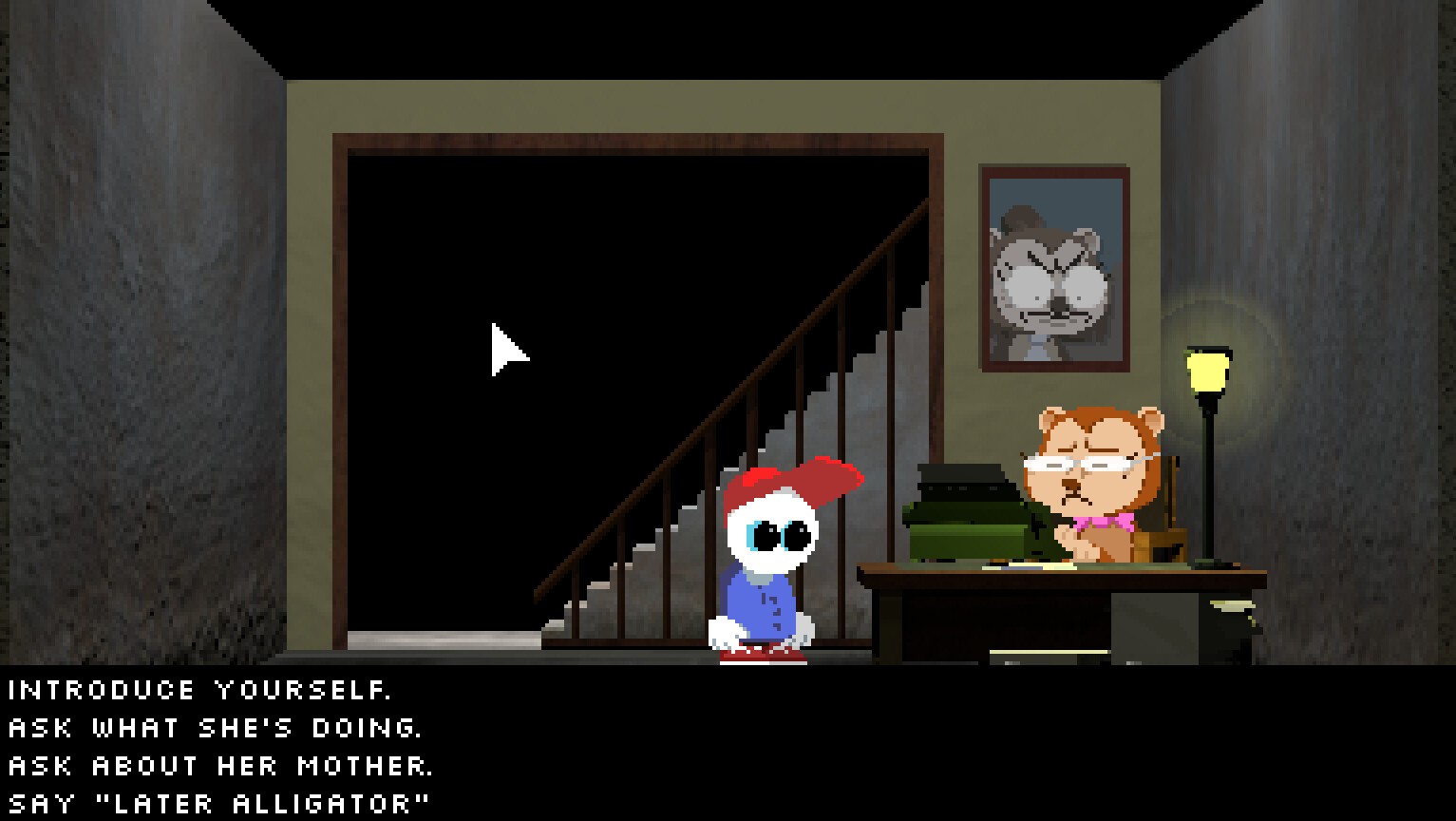
But that first time through is relatively stress-free stuff. If you're stuck with one problem, you can clear your head and make progress elsewhere. While each of the areas has its own mostly-linear progression (and you can just stick with one all the way to the end), the end-point of each progresses the main story, unraveling a little more of who Mellow is, why the house he lives in keeps changing shape (and perspective), and who the mysterious singing robot you keep bumping into is.
There really isn't a huge amount to be said about Endacopia's story, with most of the finer points being hidden away in the darker, more secretive corners of the game, but when it's firing on all cylinders, it does tackle some heavy subject matter. Found family, obsession with work, abusive relationships, and more. Never in any overbearing or preachy fashion - no dialogue runs long enough for that - but there's some real substance to chew on, beyond the funny goofs and scary monsters.
When the credits first rolled, I was confident that Endacopia would be one of the best games I'd play this year, and my opinion only improved further on a second playthrough, as I tried out alternate routes and peeled back the layers and pushed closer to that optional secret ending - a clever piece of meta-narrative that leans harder on the game's darker side. But even if you don't have the inclination or stomach to dig deeper into the game's guts for questionable rewards, this is just one of the best examples of the genre, coming from the mind of a developer younger than most of the games he's inspired by.
If I had to pick at nits here, I'd say that the game does have room for some extra accessibility options - it would be nice for those unable to keep up with the action segments to skip over them if needs be. Movement with the WASD keys works for the most part, but I'd have liked to be able to just click to move as well. And lastly, Mellow's characterization is a little bit unpredictable. Sometimes he talks like the nine-year-old he is, scarcely a deep thought to be had. Other times, he's a shockingly media-savvy and loquacious ball of sass. While I'd chalk this up to all people containing multitudes, he sometimes shifts gear a little too quickly, but this only really struck me when thinking back on it in hindsight.
But more broadly, having sat and ruminated on it and listened to its soundtrack several times through outside of the game (it's a banger start to finish, courtesy of musical collaborator Packtion), Endacopia left me filled with hope for the future of the genre, old-school or otherwise.
Endacopia is out now for £14.82/$16.50, with a free demo if you want to get a feel for the game before picking it up. Which we recommend you do.
Conclusion
Whether this is your first introduction to the genre or you're a greying old nerd looking for a nostalgic new point-and-click adventure, Endacopia is a gem, hitting all the high points of the classics of yesteryear, infused with fresh ideas, unbound creativity and an ever-unpredictable tone.
Our only real complaint is that it has to end eventually, and with the puzzles being relatively lightweight (never leaving us stuck for more than a few minutes), that might be sooner than you'd like. But at least there's plenty of secrets and that deeply-buried bonus ending to hunt for and extend the experience a few more hours.
Comments 0
Wow, no comments yet... why not be the first?
Leave A Comment
Hold on there, you need to login to post a comment...